
AI SEARCH VS TRADITIONAL SEO
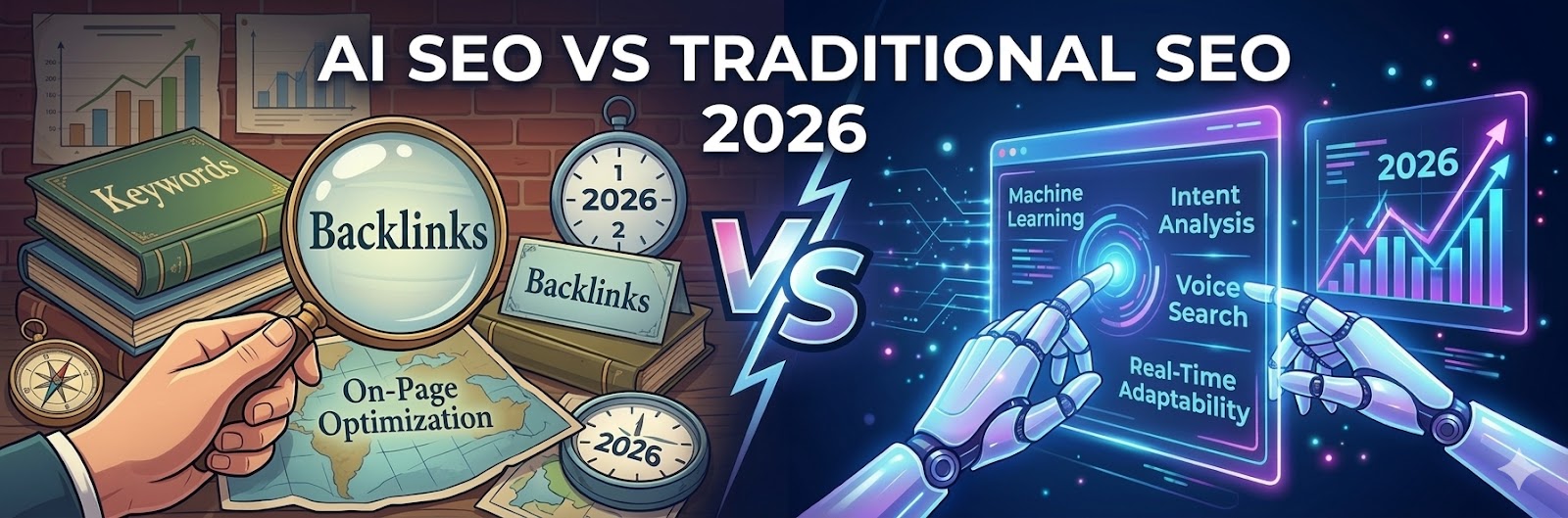
Search is experiencing the biggest transformation since the creation of Google. Instead of browsing through dozens of blue links, users are now receiving instant answers generated by artificial intelligence.
For over two decades, search engine optimization (SEO) has been the backbone of digital marketing. Businesses invested in ranking higher on search engines to capture organic traffic. But with the rapid rise of AI-powered search systems, the rules of online visibility are changing.
Platforms like ChatGPT, Perplexity, and Google's AI-driven search results are introducing a new model where answers are generated directly from multiple sources. This shift means users may never click on traditional search results — dramatically reshaping how websites attract traffic.
How Traditional SEO Worked
Traditional SEO focused on ranking webpages on search engine results pages (SERPs). When users typed a query, Google returned a list of links ranked based on relevance, authority, and technical signals.
Businesses optimized their websites using strategies like keyword research, backlink building, technical optimization, and high-quality content creation. The higher a page ranked, the more likely it was to receive clicks and organic traffic.
This system created an entire industry of SEO specialists and agencies focused on improving rankings and driving organic growth.
- Keyword targeting to rank for search queries
- Backlink building to improve domain authority
- Technical SEO to improve site performance
- Content marketing to attract search traffic
How AI Search Is Changing Everything
AI-powered search engines operate very differently from traditional search systems. Instead of showing a list of links, AI analyzes information across the internet and generates a summarized response for the user.
This means the user's question is answered instantly, often without the need to visit any individual website. While this improves convenience for users, it significantly disrupts the traditional traffic model for websites.
For example, when someone asks an AI assistant about the best SEO strategies or digital marketing trends, the system gathers knowledge from multiple sources and generates a concise response. Only a few trusted sources may be referenced in the answer.
- Direct answers instead of links
- Information aggregated from multiple websites
- Reduced need for users to click search results
The Emergence of Generative Engine Optimization (GEO)
As AI-driven search becomes more common, a new discipline is emerging: Generative Engine Optimization (GEO). GEO focuses on ensuring that brands and websites appear within AI-generated responses.
Instead of optimizing only for search engine rankings, businesses must now optimize their content so AI systems recognize it as a reliable source of knowledge.
This involves building authority, publishing expert insights, structuring information clearly, and creating trustworthy digital footprints across the internet.
Strategies for the AI Search Era
To stay competitive in the AI search landscape, businesses must adapt their digital marketing strategies. The focus is shifting from simply ranking high to becoming a trusted source that AI systems reference when generating answers.
- Create authoritative, research-backed content
- Build strong brand credibility across the web
- Structure content for easy AI interpretation
- Develop topical expertise in specific niches
- Focus on reputation and trust signals
Companies that invest in authority, expertise, and high-quality knowledge will have a much higher chance of appearing in AI-generated answers.
The Future of Online Visibility
The transition from traditional search engines to AI-driven discovery is still in its early stages, but the impact is already visible. Traffic patterns are changing, and digital marketing strategies must evolve to keep up with this shift.
In the future, businesses will compete not only for search rankings but also for inclusion in AI-generated answers. Those who adapt quickly will gain a significant competitive advantage in the evolving digital ecosystem.
Ultimately, the goal remains the same: delivering valuable, trustworthy information. The difference is that now the audience includes not just humans, but also the AI systems that guide them.
Preparing for the AI Search Era
Businesses that adapt early to AI search optimization will dominate the next generation of online visibility.
Get Your AI SEO Audit