
Ask ten SEO agencies how to get cited by ChatGPT or Google AI Overviews, and most will mention schema markup. Some sell "AI schema" as a package on its own.
The evidence in 2026 points to a more modest role. Schema still matters for search in general. But adding it is not a shortcut to AI citations. This guide covers what Google has said, what the research shows, and which structured data is worth your time.
What Google says about schema and AI features
In May 2026, Google published its guide to optimizing websites for generative AI features in Search. On structured data, its position is simple:
- You don't need special schema.org markup to appear in AI Overviews or AI Mode.
- You don't need AI-specific files, such as llms.txt, for Google's AI features.
- Structured data is still recommended as part of normal SEO, mainly for rich result eligibility.
- To be eligible for AI features, a page must be indexed and eligible to show a snippet. Those are the same requirements as regular search.
In short, Google treats schema for AI the same way it treats schema for search. Useful, but not a ranking trick.
What the research shows
The most useful test so far comes from Ahrefs, published in May 2026. The team looked at 1,885 pages that added JSON-LD schema between August 2025 and March 2026. It compared them with about 4,000 similar pages that didn't, and measured AI citations 30 days before and after.
| Platform | Change in citations after adding schema |
|---|---|
| Google AI Overviews | −4.6% (small, and not clearly caused by schema) |
| Google AI Mode | +2.4% (not different from zero) |
| ChatGPT | +2.2% (not different from zero) |
The conclusion: adding schema didn't meaningfully change AI citations on any platform.
There's an important limit. Every page in the study was already cited often by AI tools. So the test doesn't tell us whether schema helps a page that isn't cited yet get noticed. It's also true that pages cited by AI tend to have schema more often. That's most likely because well-run sites do many things right, schema being one of them.
So is schema worth adding?
Yes, for the right reasons. Schema does three useful things:
- Rich results in Google. Product prices, review stars, breadcrumbs, events and more. These still affect clicks from regular search.
- Clear facts about your business. Organization and LocalBusiness markup state your name, address, phone, logo and official profiles in a format machines read easily.
- Consistency checks. Writing schema forces you to decide the official version of your business details. That consistency matters in AI search, where tools compare what different sources say about you.
What schema won't do is turn a thin page into a cited one. AI tools quote the visible text on the page. If the answer isn't in the content, markup won't put it there.
The schema types worth your time
Organization (site-wide)
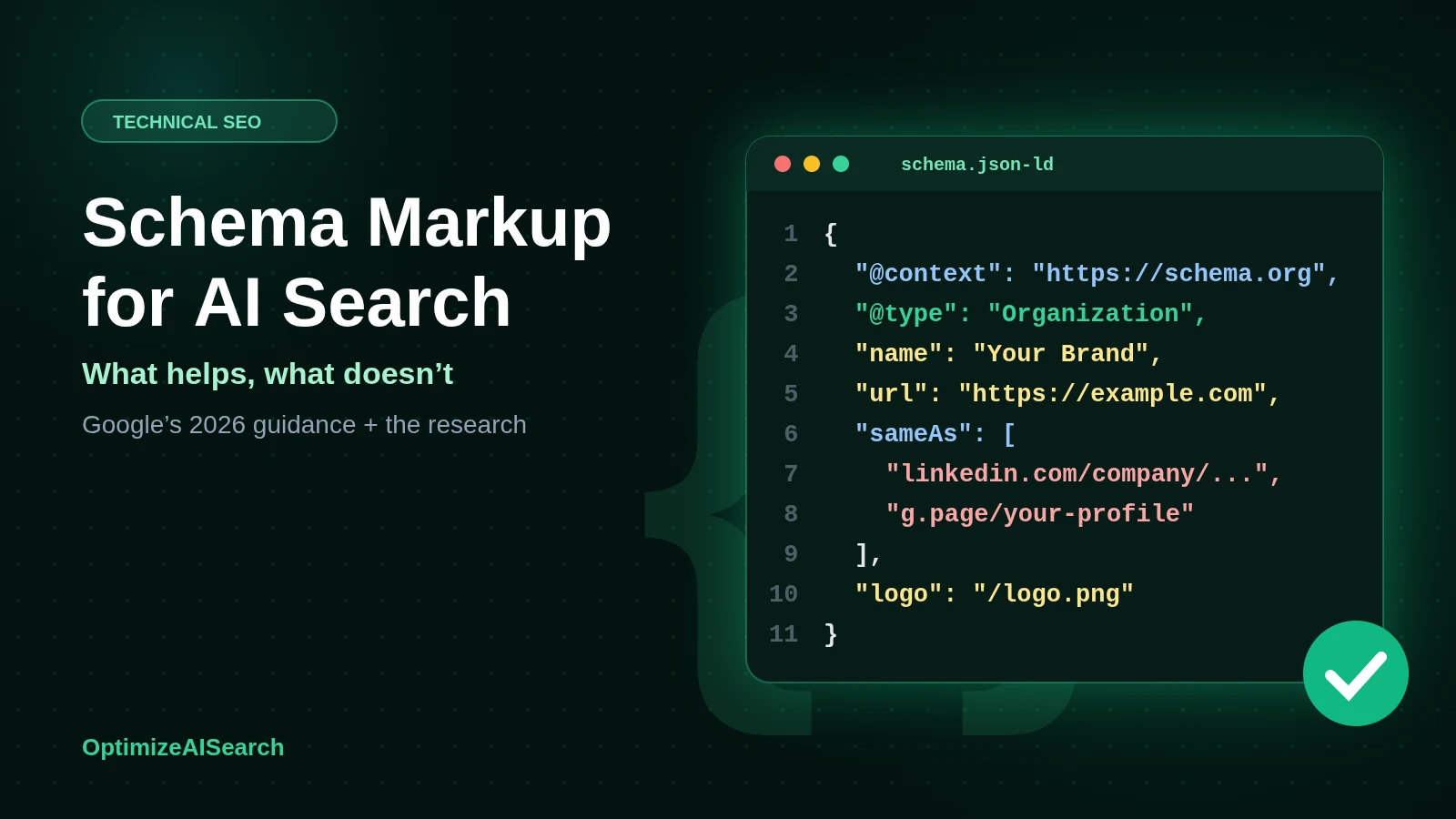
Add your legal name, logo, URL, contact details and sameAs links to your official profiles: LinkedIn, Google Business Profile, Crunchbase, social accounts. This helps systems connect mentions of your brand across the web to one entity.
LocalBusiness (or a subtype)
For businesses with a physical location. Use the most specific type that fits, such as Dentist, LegalService or Restaurant. Make sure the address and hours match your Google Business Profile exactly.
Article or BlogPosting, with a Person author
Link each article to a named author with their own page. Real authors with real credentials are part of what Google calls experience and expertise.
Product and Review
For ecommerce, these are still the most valuable types. Include price, availability and real review data. Use them only for content that's visible on the page.
BreadcrumbList
Simple, low effort, and helps search engines understand your site structure.
FAQPage, with care
Google stopped showing FAQ rich results on May 7, 2026. You don't need to remove existing FAQ markup. Google says it can still use it to understand the page, and it causes no errors. But don't add FAQ sections just to get markup. Only use it where real questions and answers already exist on the page.
Common schema mistakes
- Markup that doesn't match the page. Review stars in schema with no reviews on the page, or prices that differ from what's shown. This can lead to a manual action.
- Different details in different places. Your schema says one phone number, your footer says another, your Google profile a third. Pick one and use it everywhere.
- Schema added by plugins you forgot about. Two plugins can output two conflicting Organization blocks. Check your page source.
- Treating schema as the whole strategy. It's a small part of technical SEO, not a replacement for good content and real mentions.
How to check your schema
- Run key pages through Google's Rich Results Test to catch errors.
- Use the Schema Markup Validator (validator.schema.org) to check types that Google doesn't show as rich results.
- Check the Enhancements section in Search Console for site-wide issues.
- Compare the facts in your schema with your footer, contact page and Google Business Profile. They should match word for word.
Where to put your effort instead
If your goal is AI citations, these usually matter more than schema:
- Answer the question early. Put a clear, direct answer near the top of the page, then add detail.
- Add something others don't have. Your own data, examples, prices, photos or case studies. Google's guidance specifically calls for content that goes beyond common knowledge.
- Keep content in the HTML. Make sure key facts don't depend on JavaScript to load.
- Earn real mentions. Reviews, industry directories, interviews and comparison articles. AI tools lean on what other sites say about you.
To check whether these changes are working, track a fixed set of prompts each month. Our guide on how to measure AI search visibility walks through the setup.
Frequently asked questions
Does ChatGPT read schema markup?
Tests suggest AI tools can read text inside JSON-LD. But there's no good evidence that schema itself makes ChatGPT more likely to cite a page.
Should I add llms.txt?
Google says it isn't needed for its AI features. It does no harm, but don't expect it to change your visibility.
Which format should I use?
JSON-LD. It's the format Google recommends and the easiest to maintain.
If you're weighing outside help, read how to choose an AI search optimization agency, or talk to our AI SEO consultants about a one-off technical review.
Not sure whether your site's structured data is set up correctly? Our AI search visibility audit covers schema, crawl access and content structure in one report. For the bigger picture, see our AI SEO services or read how to measure AI search visibility.